Leadership: 4 Effective Strategies to Focus on Solutions (Not Problems)
Here we are at the end of our 12-week journey.
Together, we explored 11 behaviors that forge respect and build exceptional leadership. From “Starting with the end in mind” to “Keeping temporal boundaries”, each step laid an essential brick.
Our 12th and final leadership habit focuses on finding solutions.
When faced with an obstacle, our natural reflex is to immerse ourselves in the problem. We analyze it, we dissect it, we debate its causes. We drown in it.
This obsession with the problem, while intellectually satisfying, is a trap. It consumes our most precious resource: energy.
While we become experts on the problem, time slips away, frustration sets in, and our teams are left with uncertainty.
What if you turned the tables?
Your leadership is measured not only in your ability to diagnose a difficulty, but also in your adaptability in overcoming it. It’s the art of pivoting from “what’s wrong” to “how to make it right”.
Here are 4 effective strategies to focus on solutions (not problems)

1. The 80/20 Rule: Allocate Your Energy to the Solution
The concept: Once you understand the problem, devote at least 80% of your time and energy to exploring and implementing solutions, rather than dwelling on the problem itself. This approach redirects your attention from anxiety to possibility.
The tool / The exercise: The “12/48” rule
- How to apply: When faced with a problem, spend 12 minutes understanding it. Then commit 48 minutes to evaluating your options, selecting the most promising one, launching the first action and planning the next steps. This structured approach ensures a rapid transition from analysis to action.
The example: Tony Robbins, the famous coach, sums up this principle by advising never to spend more than 10% of your time on the problem, and at least 90% on the solution.
The coaching question: Faced with your next major challenge, how will you intentionally ensure that 80% of your energy is devoted to solutions?
2. Act Within Your Circle of Influence

Image Credit: Adam Grant
The concept: Inspired by Stephen R. Covey , this principle encourages you to focus your energy on the factors you can directly control or influence. By actively focusing your attention on the problems you can solve, your “circle of influence” naturally expands.
The tool / The exercise: The Responsibility Journal
- How to apply it: Use a journal regularly to reflect on the challenges you face. Identify moments when it’s easy to blame others and consciously reframe the situation to take 100% responsibility for your response. This practice filters out distractions and directs your energy towards the issues you can actually influence.
To see more techniques on how to apply this, read this post
Example: I’ve been writing in my diary for ten years. My first draft, which sometimes helps me in difficult situations, is to get things off my chest in writing. When I reread, I take a step back and ask myself the right questions.
Where is my circle of influence? What can I do? “What’s interesting about this situation (see next point)?
The coaching question: Looking at your current priorities, where are you investing energy in areas outside your control, and how can you reallocate that energy to expand your direct influence?
3. Turn Complaints into Growth Opportunities
The concept: This principle promotes a change of perspective, viewing problems and complaints not as obstacles, but as valuable “career stepping stones”. It’s about actively reframing negative situations to extract lessons and initiate continuous improvement.
The tool / The exercise: The “What’s interesting… Yet?” technique.
- How to apply it: When a problem or complaint arises, counter the automatic negative reaction by asking yourself, “What’s interesting about this situation?”. And “What’s not ok yet?”. The word “yet” subtly signals to your brain that a solution is possible and coming.
The example: Viktor Frankl, psychiatrist and Holocaust survivor, emphasized in his work the importance of finding meaning even in the worst experiences, illustrating the human capacity to transform suffering into growth.
The coaching question: What untapped growth opportunity lies hidden in the biggest challenge you’re currently facing?
4. Block Time for the “Non-Urgent but Important” (Quadrant II)
The concept: Inspired by Stephen R. Covey and Peter Drucker, this concept emphasizes the importance of devoting structured time to activities vital to long-term success. These “Quadrant II” activities include strategic planning, continuous learning and proactive problem prevention.
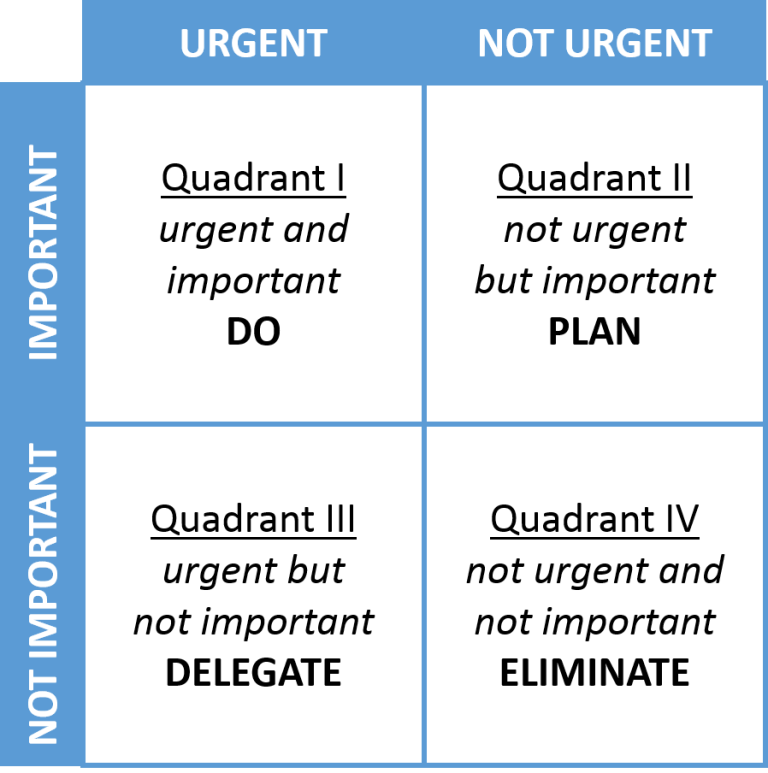
The tool / The exercise: The “Quality Time Block
- How to apply it: Intentionally block off dedicated periods in your diary (for example, 30 to 90 minutes) for non-urgent but important activities. This could include strategic thinking, learning (reading 15 minutes a day), or personal development. Consistently investing time in these areas creates a “virtuous circle” that reduces the pressure of emergencies.
The example: Peter Drucker emphasized that “knowledge workers” need “alone time” to concentrate and make a difference, a fundamental principle for strategic thinking and long-term problem-solving.
The coaching question: Beyond your daily urgencies, what single “non-urgent but important” activity will you commit to safeguarding time for this week, knowing it directly fuels your long-term vision?
This 12-week journey ends here. But your practice is just beginning.
These 12 behaviours are not trophies to collect, but muscles to train every day.
You now have a complete framework in your hands. Use it not as a to-do list, but as a compass to guide your decisions.
If you’re ready to integrate these 12 behaviors into a coherent leadership system to accelerate your impact, I’m here to help you build the bridge between understanding and practice.
Contact me for an exploratory discussion.
Thank you for reading and giving me so much feedback over the last 12 weeks.
Talk to you soon,
Dror
Say hello on LinkedIn

In the same series :
- Part 1: How to apply “Start with the End in Mind” to accelerate your career: A 12-week guide
- Part Two: Active listening: the key skill for accelerating your career advancement (and how to develop it)
- Part Three: How to develop your employees’ potential: the ultimate guide for leaders
- Part Four: How to accelerate your career by mastering uncertainty
- Part Five: 4 essential self-reflection tools for developing your leadership skills
- Part Six: Assuming your mistakes: 4 concepts for turning setbacks into career levers
- Part Seven: Mastering execution: 4 essential pillars for unapologetic results
- Part 8: Small promises, big trust: Leaders’ secret to building reliability
- Part 9: Direct leadership communication: a guide to building trust and clarity
- Part 10: Leadership in times of crisis: 4 techniques for staying calm and making clear decisions
- Part Eleven: Master your agenda: 4 time management strategies for leaders
- Part Twelve: Leadership: 4 effective strategies for focusing on solutions (not problems)
***
If you liked this article, you’ll probably like my newsletter. Join a community of ambitious readers who want to succeed in their careers while enjoying their lives. Register here and receive it every Wednesday morning directly in your mailbox.
***
PS: Whenever you’re ready, here are 2 more ways I can help you accelerate your career through coaching:
For aspiring executives:
Accelerate your rise to the top: I’ll help you create your global vision and develop a plan to accelerate your journey. Contact me and let’s find out if we can work together.
For current executives :
Increase your impact as a leader: You know that even small improvements at your level can generate significant organizational results and career acceleration. I’ll work with you on your project and guarantee the results. Contact me and let’s see if we can work together.


Leave a Reply